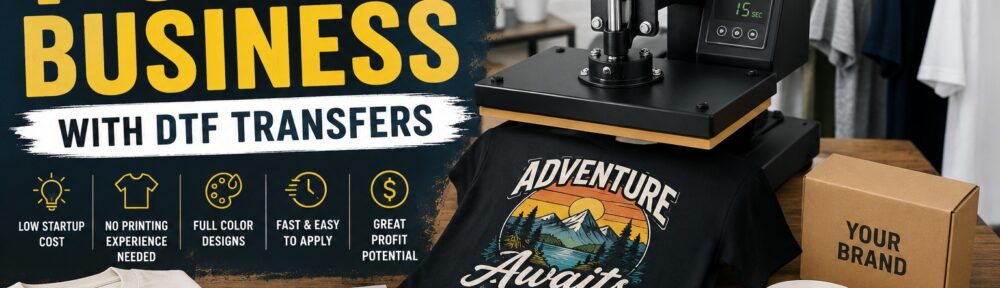
TLDR
Starting a T-shirt business with DTF transfers is one of the easiest ways to sell custom apparel without buying a large printer or learning screen printing first.
You need a clear niche, a few strong designs, blank shirts, a heat press, packaging supplies, and a reliable DTF transfer supplier. Instead of printing the transfers yourself, you can order ready-to-press transfers and apply them as orders come in.
For beginners, custom DTF transfers from CustomStickers.com are a practical supply option because you can upload artwork, choose transfer sizes, and order full-color transfers for shirts, hoodies, totes, uniforms, merch drops, and small batches.
DTF Transfers Make Apparel Easier to Start
A T-shirt business used to feel like a bigger leap. You either needed screen printing equipment, a local print partner, vinyl cutting tools, or enough order volume to justify bulk production.
DTF transfers changed that.
DTF stands for direct-to-film. The design is printed onto a special film, prepared with adhesive powder, and then pressed onto fabric with heat and pressure. For a small apparel brand, the important part is simple: you can order the transfer already made, then press it onto a shirt when you are ready.
That gives you a clean starting point. You do not need to print the transfer yourself. You do not need to weed vinyl. You do not need to commit to hundreds of finished shirts before you know which designs will sell.
You can start with a few designs, test demand, and build from there.
What You Need to Start
A basic DTF T-shirt business does not need a warehouse. It does need a simple, repeatable setup.
Start with these essentials:
- A niche or audience
- Finished shirt designs
- Blank shirts
- Ready-to-press DTF transfers
- A heat press
- Heat-resistant tape, if needed
- Parchment paper or finishing sheets, depending on instructions
- Packaging materials
- A way to sell online or locally
- A basic system for tracking orders, costs, and sizes
You can add more later. But do not start by buying everything you see in apparel business videos. A small, clean setup is better than an overbuilt setup you do not fully understand yet.
Your first goal is not to own every tool. Your first goal is to sell shirts customers actually want.
Pick a Niche Before You Design
The fastest way to make forgettable shirts is to design for “everyone.”
A strong T-shirt business usually starts with a specific audience. That audience does not have to be huge. It just needs to be clear enough that you know what they like, what they would wear, and where you can reach them.
Good beginner niches include:
- Local pride shirts
- Fitness and gym shirts
- Teacher shirts
- Pet owner shirts
- Mom and dad shirts
- Fishing, hunting, or outdoor shirts
- Coffee shop merch
- Band or event merch
- Church group shirts
- Sports team parent shirts
- Funny work shirts
- Small business uniforms
- Seasonal holiday shirts
- Bachelor and bachelorette shirts
The best niche is one you understand. If you already know the jokes, style, colors, and buying habits of that group, you will make better designs.
And keep the first product line tight. Five strong designs are better than thirty average ones.
Create Designs That Work on Shirts
T-shirt designs need to be readable. That sounds basic, but it matters.
A shirt design is not viewed the same way as a phone screen graphic. People see it while someone is walking, standing, sitting, or moving through a crowd. Small text, thin lines, and low contrast can disappear fast.
For DTF transfers, full-color artwork, gradients, small details, and bold graphics can work well. That is one of the reasons DTF is popular. But good print capability does not mean every design should be complicated.
Use these rules for your first designs:
- Make the main text readable from a few feet away.
- Use strong contrast between the shirt color and design.
- Avoid tiny text unless it is decorative.
- Keep the design centered and balanced.
- Test light and dark shirt versions.
- Avoid copyrighted characters, logos, or phrases you do not own.
- Export artwork at high resolution.
- Use transparent backgrounds when needed.
Copyright and trademark issues are worth taking seriously. Do not build a business around designs using sports team logos, Disney characters, band names, celebrity images, or protected slogans unless you have permission. It may sell for a minute, but it is not a stable foundation.
Build your own designs. That is slower at first, but safer.
Order DTF Transfers Instead of Printing Them Yourself
There are two ways to use DTF: print your own transfers or buy transfers from a supplier.
Most beginners should buy transfers first.
Printing DTF transfers in-house can make sense later, but it adds equipment costs, maintenance, ink management, film, powder, curing, troubleshooting, and workspace needs. That is a lot to learn before you have proven designs.
Ordering transfers lets you focus on:
- Design quality
- Shirt selection
- Pressing
- Product photos
- Sales
- Customer service
- Fulfillment
That is enough work already.
CustomStickers.com offers custom DTF transfers for shirts, hoodies, totes, uniforms, brand merch, event apparel, and one-off garments. Their product page notes full-color printing with white ink, detailed artwork support, and sizes from 4″ x 4″ up to 12″ x 12″. That makes it a good fit for left-chest logos, sleeve prints, full-front designs, and small merch runs.
For a starter brand, that flexibility helps. You can order a few transfers, test how they press, photograph sample shirts, and then reorder the designs that get interest.
Choose the Right Blank Shirts
Blank shirts affect how your brand feels.
A good design on a poor shirt still feels like a poor shirt. So do not choose blanks only by the lowest price. You need a shirt that fits your audience, price point, and design style.
Think about:
- Fabric feel
- Fit
- Color options
- Size range
- Shrinkage
- Availability
- Reorder consistency
- Cost per shirt
- How the fabric handles heat pressing
Cotton and cotton/poly blends are common choices for T-shirt businesses. Polyester can work too, but it may need different heat settings and extra care to avoid scorching or press marks.
Before selling a blank, wear one. Wash it. Dry it. Press a sample transfer. Wash it again. That is the easiest way to know what your customers will experience.
A shirt that looks fine for one photo may not be good enough for repeat buyers.
Buy a Real Heat Press
A heat press is one of the few tools you should not cheap out on too much.
A household iron can work for some small projects, but it is not ideal for building a business. The problem is consistency. A heat press gives you more even pressure, steadier temperature, and cleaner repeat results.
For a T-shirt business, start with a clamshell or swing-away heat press large enough for the designs you plan to sell. A 15″ x 15″ press is a common starter size. It gives you room for standard front prints without being too large for a small workspace.
You need control over:
- Temperature
- Time
- Pressure
- Even contact
- Garment placement
Follow the DTF transfer supplier’s instructions first. Many DTF transfers are pressed in the general range of about 290°F to 325°F for 10 to 15 seconds, depending on fabric, transfer type, and supplier instructions. But do not treat that as universal law. Cotton, polyester, blends, hoodies, and tote bags can all behave differently.
Test before selling.
Press Your First Sample Shirts
Do not launch with a product you have never pressed.
Make samples first. Use the exact blank shirt, transfer size, heat press settings, and washing process you plan to use for customers. That lets you catch problems before they become refunds.
A basic pressing workflow often looks like this:
- Pre-press the shirt for a few seconds to remove moisture and wrinkles.
- Position the transfer carefully.
- Press using the recommended time, temperature, and pressure.
- Peel according to the supplier’s instructions.
- Do a finishing press if recommended.
- Let the shirt cool.
- Inspect the print.
- Wash test the garment.
Watch for cracking, lifting edges, scorching, crooked placement, press marks, and colors that do not match the mockup.
This is one of those steps that feels slow until it saves you from shipping twenty flawed shirts.
Price Your Shirts With Real Costs
A T-shirt business can look profitable until you count everything.
Do not price only by blank shirt plus transfer cost. Include the full cost of making and selling the shirt.
Your cost should include:
- Blank shirt
- DTF transfer
- Shipping for supplies
- Packaging
- Labels or inserts
- Website fees
- Marketplace fees
- Payment processing fees
- Your time
- Misprints and replacements
- Marketing costs
- Customer shipping, if you offer free shipping
A simple starter pricing formula is:
Product cost + labor + fees + profit margin = retail price
For example, if your shirt, transfer, packaging, and fees cost more than expected, a $20 retail price may leave very little profit. Many small apparel brands price too low because they compare themselves to huge retailers. That is a hard game to win.
You are not trying to be the cheapest shirt on the internet. You are trying to sell a shirt people want at a price that gives the business room to survive.
Start With Small Drops
DTF transfers work well for small drops.
Instead of launching a huge store, start with a focused collection. A small drop can help you test designs, shirt colors, sizing demand, and customer interest.
A good first drop might include:
- Three to five designs
- Two shirt colors
- Standard adult sizes
- One clear theme
- Simple product photos
- A limited order window
You can either stock a small number of blank shirts or take preorders. Preorders reduce inventory risk, but they require clear communication. Customers need to know when the shirts will be made and shipped.
If you stock inventory, keep it modest. Medium, large, and XL often move faster than edge sizes, but your audience may differ. Track what sells. Guess less next time.
Sell Through the Right Channel
You do not need every sales channel on day one.
Choose the simplest path for your audience.
Good starter sales channels include:
- Shopify
- Etsy
- TikTok Shop
- Facebook groups
- Local markets
- Pop-up events
- School or team order forms
- Direct invoices for local businesses
If your designs are niche and giftable, Etsy may help with discovery. If you already have an audience, Shopify gives you more control. If your shirts are local or community-based, Facebook groups and local events may sell better than a polished website.
Meet the customer where they already are.
Take Product Photos That Show the Shirt Clearly
Product photos sell the shirt before the customer touches it.
Mockups are useful, but real photos build trust. Press sample shirts and photograph them in good light. Show the front design clearly. Include close-ups of the print, full-shirt photos, and at least one lifestyle-style photo if it fits the brand.
Good photo basics:
- Use natural light when possible.
- Keep the background clean.
- Show the real shirt color.
- Photograph the print straight-on.
- Include size and fit notes.
- Avoid over-editing colors.
- Show detail shots for textured or colorful designs.
You do not need a professional studio. You do need clear photos that match what customers receive.
Package Orders Like a Brand
Packaging does not need to be fancy. It needs to be clean, protected, and consistent.
A good starter packaging setup includes:
- Poly mailers or paper mailers
- Folded shirt
- Thank-you card
- Care instruction card
- Logo sticker
- Packing slip, if needed
Care instructions matter for DTF shirts. Tell customers to wash inside out, use cold water when possible, and avoid high heat in the dryer. CustomStickers.com gives similar care guidance for finished garments using DTF transfers, and it is good advice for customers who want the print to last.
A small sticker or thank-you card can also make the order feel more finished. It is not required, but it helps customers remember the brand.
Common Mistakes to Avoid
Most beginner T-shirt business mistakes are avoidable.
Watch out for these:
- Starting with too many designs
- Buying too much blank inventory
- Using copyrighted artwork
- Skipping sample testing
- Using an iron for business-level production
- Not tracking costs
- Pricing too low
- Pressing every fabric with the same settings
- Ignoring wash testing
- Using mockups that do not match the final product
- Selling before knowing your production timeline
- Forgetting care instructions
The best beginner setup is boring in a good way. Fewer designs. Better testing. Clear costs. Consistent pressing. Clean packaging.
That is how you avoid chaos.
When to Scale
Scale when you have proof.
Proof looks like repeat orders, strong customer feedback, consistent shirt sizes, low misprint rates, and designs that sell without constant discounts.
Once the business is working, you can add:
- More shirt colors
- Hoodies
- Tote bags
- Youth sizes
- Seasonal drops
- Wholesale orders
- Team uniforms
- Event merch
- Custom order forms
- Bulk DTF transfer orders
- Better packaging
Do not scale every part at once. Add one new variable, test it, then move forward.
A hoodie drop, for example, may need different blank costs, different transfer sizes, different press settings, and different shipping packaging. That is manageable if your main T-shirt process is already stable.
Final Thoughts
You can start a T-shirt business with DTF transfers without owning a commercial printer or ordering hundreds of finished shirts upfront.
Start with a clear audience. Make a small set of strong designs. Order ready-to-press transfers. Use good blanks. Test your pressing process. Price with real costs. Sell through one or two channels before expanding.
DTF transfers are not a shortcut around building a real brand. But they do remove a lot of the early production friction.
That makes them a strong starting point for small clothing brands, local merch, event shirts, online shops, and creators who want to test apparel without taking on too much risk too early.
FAQs
Can I start a T-shirt business with DTF transfers?
Yes. DTF transfers are a practical way to start a T-shirt business because you can order ready-to-press designs and apply them with a heat press. This lets you test designs without buying a DTF printer.
Do I need a DTF printer to sell DTF shirts?
No. Most beginners should order DTF transfers from a supplier first. Printing your own transfers requires more equipment, maintenance, and troubleshooting. Buying transfers lets you focus on designs, sales, and fulfillment.
What equipment do I need for DTF shirts?
You need blank shirts, DTF transfers, a heat press, packaging supplies, and a way to sell. A heat press is strongly recommended because it gives more consistent pressure and temperature than a household iron.
What shirts work best with DTF transfers?
DTF transfers can work on cotton, polyester, and many blends. Always test your specific blank shirt before selling because fabric content, thickness, dye, and heat sensitivity can affect results.
How much should I charge for DTF T-shirts?
Price based on your full cost, not just the blank shirt and transfer. Include packaging, fees, labor, misprints, shipping supplies, and profit. Many small brands underprice because they forget the hidden costs.
Are DTF transfers good for small clothing brands?
Yes. DTF transfers are a good fit for small clothing brands because they work well for small batches, full-color designs, detailed artwork, event merch, team shirts, and test drops.