TLDR
Custom spice labels make spice jars easier to read, easier to organize, and more useful in a real kitchen.
- Use waterproof or laminated labels if the jars will be handled often.
- Choose a label size that fits the jar before designing the artwork.
- Keep the front label simple: spice name first, style second.
- Add dates or batch numbers if you cook often, refill jars, or sell spice blends.
- Use custom printed labels from a service like CustomStickers.com when you want cleaner results than a home printer can usually provide.
A good spice label does not need to be fancy. It needs to be readable when your hands are dusty with flour, your pot is bubbling, and you are trying to find cumin before the onions burn.
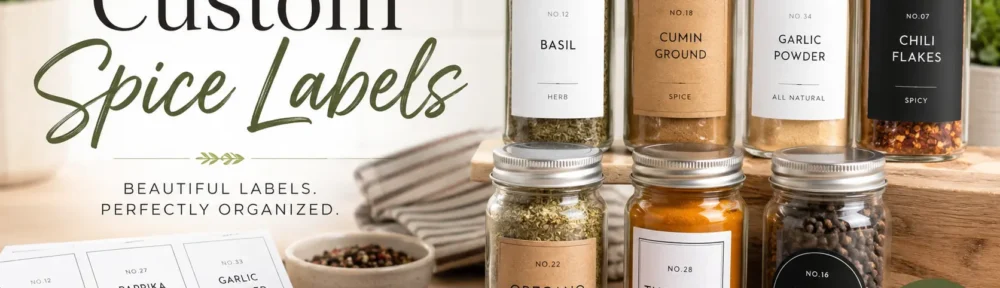
Custom spice labels are useful because spice jars have one job: help you find the right ingredient fast. The right label can also make a pantry look calmer, help small food brands look more professional, and make homemade spice blends feel finished instead of improvised.
Why Custom Spice Labels Are Worth Making
Spice labels are one of those small upgrades that make a kitchen feel more put together right away. But this is not just about looks.
Custom spice labels help with:
- Finding spices faster
- Avoiding duplicate purchases
- Keeping refill jars consistent
- Marking homemade spice blends
- Tracking freshness dates
- Making gifts look more polished
- Branding spice products for small businesses
- Separating similar-looking spices like cumin, coriander, turmeric, curry powder, and paprika
The biggest practical benefit is speed. If every jar has a different store label, font, color, and shape, your eyes have to search harder. If every jar uses the same custom label system, the pantry becomes easier to scan.
That matters more than people think. Pantry organization is not about pretending you live in a catalog. It is about making normal cooking less annoying.
The Best Uses For Custom Spice Labels
Custom spice labels can be used in a few different ways, and the right design depends on the goal.
Pantry Organization
For home kitchens, custom spice jar labels should prioritize readability. A clean label with the spice name in a large font will usually work better than a decorative design with tiny script.
Good home pantry labels usually include:
- Spice name
- Optional category, such as herb, spice, blend, or salt
- Optional refill date
- Optional expiration or best-by date
For most home cooks, that is enough.
Homemade Spice Blends
Custom spice labels are also helpful for blends you make yourself. If you make taco seasoning, BBQ rub, curry blend, ranch seasoning, chili powder, everything bagel seasoning, or chai spice, a custom label makes the jar easier to reuse.
For homemade blends, include:
- Blend name
- Main use, such as “for chicken,” “for tacos,” or “for roasted vegetables”
- Date made
- Optional ingredient list
This is especially helpful if you make a blend once, love it, and then forget what went into it. A label can save the recipe.
Gifts And Party Favors
Spice jars make good gifts because they are useful, small, and easy to personalize. Custom labels work well for wedding favors, holiday gifts, housewarming gifts, teacher gifts, and party favors.
For gifts, the label can include:
- Spice or blend name
- Short message
- Event name
- Date
- Ingredients
- Serving idea
A simple “Everything Bagel Seasoning” label with a small “Made for Sarah’s Brunch” line looks more thoughtful than a plain jar with a handwritten sticker.
Small Business Spice Packaging
For small food businesses, custom spice labels do more than organize jars. They help communicate trust. A clean label makes a spice blend look ready for a shelf, a farmers market booth, an online order, or a local gift basket.
Small business spice labels may need:
- Product name
- Net weight
- Ingredient list
- Business name and address
- Allergen information, when relevant
- Lot number or batch number
- Best-by date
- Barcode or QR code, if needed
- Required regulatory information
If you sell spices, check current federal, state, and local food labeling rules before printing a large batch. Requirements can vary based on what you sell, where you sell it, and how the product is packaged.
What To Put On A Custom Spice Label
The best custom spice labels are clear before they are decorative. Start with the information the user needs.
For home use, a front label can be simple:
- Basil
- Cumin
- Smoked Paprika
- Garlic Powder
- Black Pepper
- Taco Seasoning
- Italian Herb Blend
If you want a more complete label, add a second line:
- Basil, dried herb
- Cumin, ground spice
- Paprika, smoked
- Peppercorns, whole
- Cinnamon, ground
- Chili flakes, hot
For homemade blends, use a more descriptive label:
- House Taco Seasoning
- Smoky BBQ Rub
- Lemon Herb Salt
- Golden Curry Blend
- Spicy Chili Mix
- Holiday Baking Spice
If the jar is for your own pantry, do not overcomplicate it. If the jar is for resale, treat the label as packaging and include the information required for customers and compliance.
Best Label Materials For Spice Jars
Spice jars live in a busy environment. They get touched with damp hands. They sit near oil, steam, heat, and food residue. Paper labels can work, but they are not always the best long-term choice.
For most spice jars, the best options are:
- Waterproof vinyl labels: Good for jars that get handled often.
- Laminated labels: Better resistance to rubbing, moisture, and everyday wear.
- Kraft labels: Nice for a rustic look, but not always ideal around moisture.
- Clear labels: Good when you want the jar and spice color to show through.
- White labels: Clean, readable, and easy to match across a full pantry.
- Black labels: Strong contrast, especially with white or metallic text.
- Round lid labels: Helpful if spices are stored in drawers.
- Rectangle front labels: Best for shelves where you see the jar face.
CustomStickers.com is a good fit for durable custom spice labels when you want waterproof vinyl, clean print quality, and a proofing process before production. That is especially useful if your label includes small text, a logo, a border, or a custom shape.
For short-term pantry projects, printable labels can be fine. For a polished pantry, small food business, or gift set, professionally printed labels usually look cleaner.
Choosing The Right Size And Shape
Measure the jar before designing the label. This sounds obvious, but it is where a lot of label projects go sideways.
A label that looks great on a screen may feel too large once it wraps around a small spice jar. A tiny label may look elegant, but become hard to read from a shelf.
Common spice label shapes include:
- Rectangle labels for front-facing jars
- Square labels for modern glass jars
- Oval labels for softer pantry designs
- Round labels for jar lids
- Wraparound labels for small retail bottles or tins
- Die-cut labels for logos, mascots, or branded shapes
For a standard spice jar, a front rectangle label is usually the safest choice. For jars stored in a drawer, add a round lid label so you can read the spice name from above.
If you sell spice blends, leave room for required information. A minimalist front label can still work, but you may need a back label or wraparound label for ingredients, weight, and business details.
Custom Spice Label Design Tips
Good spice label design is simple. The spice name should be the first thing people see.
Use these design rules:
- Make the spice name the largest text.
- Use one or two fonts, not five.
- Keep decorative elements small.
- Use strong contrast between text and background.
- Avoid thin script fonts for the main spice name.
- Keep label designs consistent across the whole set.
- Use categories only if they help, such as herbs, blends, salts, or baking.
- Leave breathing room around the edges.
- Print a test label before ordering a full set.
The best designs usually have a system. For example, all herbs use green accents. Baking spices use warm brown accents. Spicy blends use red accents. Salts use gray or cream accents.
But do not let the color system become too cute to read. A label that looks great online but cannot be read from two feet away is not doing its job.
Custom Spice Labels For Businesses
Custom spice labels for businesses need more care than home pantry labels. The label is part of the product. It needs to look good, but it also needs to be accurate.
For spice businesses, the label should typically include:
- Product identity
- Net quantity
- Ingredient list
- Business name
- Business address or required contact information
- Allergen declaration, when applicable
- Nutrition information or exemption status, when applicable
- Lot code or batch code
- Best-by date
- Storage instructions, if useful
This is not legal advice, and food labeling rules can change. If you are selling spice blends, check FDA guidance and your state requirements before printing.
A small homemade spice blend sold at a local market may still need proper labeling. A blend sold online and shipped across state lines may need even more careful review. This is one of those places where “it looks nice” is not enough.
DIY Labels Vs Professionally Printed Labels
DIY spice labels are good when you want speed, low cost, and flexibility. You can print a few labels at home, test a design, and update it whenever you want.
DIY labels are best for:
- Personal pantry organization
- Small one-off projects
- Testing label names
- Temporary jars
- Early design drafts
Professionally printed labels are better when you want consistency, durability, and a cleaner finished look.
Professional printing is best for:
- Gift sets
- Small business packaging
- Farmers market products
- Pantry makeovers
- Branded spice blends
- Matching label sets
- Jars that get handled often
A good middle path is to design a small test batch first. Print a few at home or order a small run. Put them on real jars. Use them for a week. Then adjust the font size, spacing, or shape before ordering more.
Common Mistakes To Avoid
Custom spice labels are simple, but small mistakes can make them harder to use.
Avoid these mistakes:
- Using fonts that are too small
- Picking a label shape before measuring the jar
- Designing only for looks and not readability
- Forgetting lid labels for drawer storage
- Using paper labels near moisture or oil
- Skipping dates on homemade spice blends
- Printing retail labels before checking food labeling rules
- Using low-resolution logos or artwork
- Placing labels on dusty, oily, or damp jars
- Applying labels before deciding the jar layout
The last one is more common than it sounds. Line up your jars first. Decide where the label should sit. Then apply the labels.
How To Apply Spice Labels Cleanly
A nice label can still look messy if it is applied in a hurry.
Use this simple process:
- Remove the old label and adhesive.
- Wash and dry the jar completely.
- Wipe the label area with a clean cloth.
- Hold the new label in place before peeling the backing.
- Apply one edge first.
- Smooth slowly from one side to the other.
- Press the edges down firmly.
- Let the adhesive settle before heavy handling.
For round jars, go slowly. Curved glass makes alignment more noticeable. If you are labeling a full pantry, apply one test label first and check the height before applying the rest.
Final Thoughts
Custom spice labels make a pantry easier to use and nicer to look at. That is the whole point. The best label is not the most ornate one. It is the one that helps you find the right spice quickly and holds up to real kitchen use.
For home kitchens, keep the design clear and consistent. For gifts, add a personal detail without crowding the label. For small business spice packaging, build the label around both branding and required product information.
If you want custom spice labels with a more durable finish, CustomStickers.com is a strong option for waterproof vinyl labels, custom shapes, and a proofing process before printing. Start with your jar size, keep the spice name readable, and build the design around how the label will actually be used.
FAQs
What Size Should Custom Spice Labels Be?
The best size depends on your jar. For most small spice jars, a front rectangle label or oval label works well. Measure the flat label area before designing, and leave room around the edges so the label does not wrap awkwardly.
Are Waterproof Labels Worth It For Spice Jars?
Yes, waterproof or laminated labels are worth it if the jars will be handled often, stored near the stove, wiped clean, or used in a busy kitchen. Paper labels can work for light use, but they wear faster.
What Should I Put On Homemade Spice Blend Labels?
For homemade blends, include the blend name, ingredients, date made, and best use. For example: “Smoky BBQ Rub,” “brown sugar, paprika, garlic, onion, pepper,” and “best for chicken and roasted vegetables.”
Can I Sell Spices With Custom Labels?
Yes, but retail spice labels may need specific information such as product identity, net weight, ingredient list, business information, allergen details, and nutrition labeling or exemption status. Check current food labeling rules before selling.
Should Spice Labels Go On The Front Or Lid?
Use front labels if your jars sit on shelves. Use lid labels if your spices are stored in a drawer. Many organized pantries use both: a front label for display and a lid label for fast drawer access.
Can I Use Custom Stickers As Spice Labels?
Yes, custom stickers can work well as spice labels, especially when they are made from durable vinyl and sized for the jar. For kitchen use, choose a material that handles moisture, rubbing, and frequent contact.
SEO Tags:
custom spice labels, spice jar labels, pantry labels, custom labels, spice packaging, waterproof labels, kitchen organization