TLDR
- The best soap labels make the scent, ingredients, brand style, and required product details easy to understand.
- Belly bands, full wraps, clear labels, circle labels, and boxed soap labels all work well for different types of soap packaging.
- Soap brands should be careful with claims like “moisturizing,” “healing,” “antibacterial,” or “for eczema,” since those claims can change how the product is regulated.
- For soap that may be handled near water, oils, or damp countertops, laminated waterproof labels are often a safer choice than plain paper.
- A consistent label system across scents makes your soap line easier to shop, gift, and reorder.
A bar of soap has about three seconds to explain itself. The customer sees the color, picks it up, smells it if they can, and looks for a reason to trust it. That is where smart labeling does a lot of quiet work.
The best label ideas for soap brands are not just pretty. They help customers understand the scent, ingredients, size, purpose, and brand style without making the package feel crowded. For handmade soap brands, bath and body shops, farmers market sellers, and small product lines, the right soap label can make a simple bar feel finished and ready to sell.
Start With What Every Soap Label Needs
Before choosing fonts, colors, or label shapes, start with the basic information your soap label needs to carry.
For many soap brands, the front label should clearly show:
- Brand name
- Product name
- Scent or variety
- Product identity, such as “soap” or “cleansing bar”
- Net weight
- A clear visual style that matches the soap
The back, bottom, side panel, or inside wrap can carry the more practical details:
- Business name and address
- Ingredients, when required or helpful
- Batch number or date
- Directions or care notes
- Website or QR code
- Warnings, if needed
This is the part that is easy to treat like an afterthought. But it matters. A beautiful label that forgets the net weight or hides the business name can create problems later, especially if the soap moves from a market table to retail shelves.
A good rule: make the front label sell the soap, and make the secondary label support the sale.
Best Label Ideas For Soap Brands That Sell In Person
Soap sells well in person because customers can see the texture, smell the scent, and compare bars side by side. The label should support that kind of shopping.
Belly Band Labels
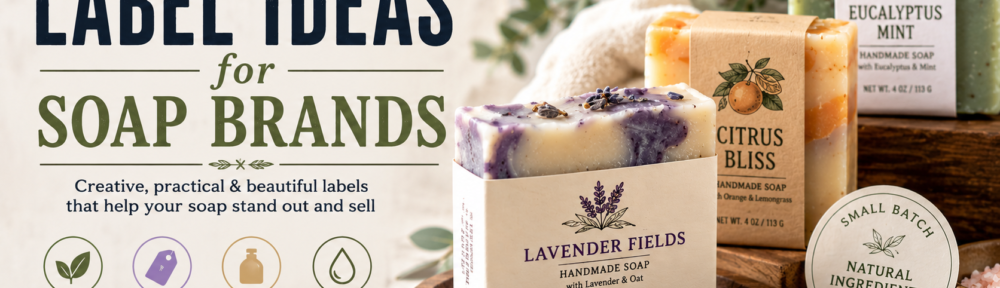
A belly band, sometimes called a cigar band, wraps around the center of the soap. It is one of the best label ideas for soap brands that want to show the actual bar.
This works especially well for:
- Handmade cold process soap
- Swirled soap
- Layered soap
- Botanical bars
- Rustic or natural brands
- Farmers market displays
The tradeoff is space. A belly band gives you less room for ingredients and product details, so you may need a back panel, small side text, or a QR code.
Full Wrap Labels
A full wrap covers more of the bar. It gives you more room for ingredients, scent notes, directions, and branding.
Use a full wrap if your soap line needs more explanation. This can work well for goat milk soap, exfoliating bars, shampoo bars, facial bars, or gift sets.
The tradeoff is that the soap itself is less visible. If your bars are highly visual, consider leaving a window or using a wrap that still shows part of the soap.
Front And Back Labels
If your soap is boxed, bagged, or shrink-wrapped, a front label plus a back label can look clean and organized.
The front label can stay simple:
Brand name
Lavender Oat Soap
Net Wt. 4 oz
The back label can carry:
Ingredients
Business information
Usage notes
Website
Batch details
This is one of the easiest systems to scale because every scent can use the same layout.
Circle Labels
Circle labels work well as seals, scent badges, or simple front labels on boxes and paper wraps. They feel friendly and easy to place.
Use circle labels for:
- Soap boxes
- Tissue-wrapped bars
- Gift sets
- Sample soaps
- Seasonal batches
- Thank-you seals
A circle label is not always the best choice for long ingredient lists. But it is excellent for brand recognition.
Clear Labels
Clear labels are a good fit when the packaging already has a strong color or texture. They let the soap, box, jar, or bag show through while still adding the product information.
Clear labels work especially well on:
- Transparent soap sleeves
- Glass jars for soap samples
- Minimal packaging
- White or kraft boxes
- Modern bath and body brands
Keep contrast in mind. Clear labels can look great, but small text may be hard to read if the background is busy.
Build Label Themes Around Your Brand Style
Your soap label should feel like the brand, not just the scent. A lavender soap from a farmhouse brand should not look the same as a lavender soap from a modern spa brand.
Here are some practical directions.
Botanical Soap Labels
Botanical labels work well for soaps made with herbs, florals, clays, essential oils, or plant-based ingredients.
Good design details include:
- Soft green, cream, clay, or muted floral colors
- Small ingredient illustrations
- Simple line art
- Scent notes like “lavender, rosemary, cedar”
- A clean ingredients panel
This style works best when it stays calm. Too many leaves, flowers, and script fonts can make the label harder to read.
Minimalist Spa Labels
Minimalist soap labels are a strong fit for brands that want a clean, calm, modern look.
Use:
- Plenty of white space
- One or two fonts
- Neutral colors
- Short scent names
- Matte labels
- Simple product descriptions
For example:
Charcoal Mint
Cleansing Bar
Net Wt. 4 oz
This style depends on restraint. If everything is centered, spaced well, and easy to read, the label feels polished without needing much decoration.
Rustic Market Labels
Rustic labels work well for handmade soap brands that sell at farmers markets, local shops, farm stands, and craft fairs.
Good fits include:
- Kraft-style paper looks
- Warm neutrals
- Hand-drawn icons
- Batch numbers
- “Handmade in [city/state]”
- Simple scent names
This style should still be readable. Rustic does not need to mean cluttered.
Colorful Gift Labels
Some soaps are bought because they feel fun to give. For colorful bars, seasonal scents, and playful product lines, the label can carry more personality.
Ideas include:
- Bright scent color coding
- Bold product names
- Small pattern backgrounds
- Limited-edition stickers
- Matching gift set labels
This works well for birthday gifts, teacher gifts, holiday soaps, shower favors, and boutique displays.
Make The Scent Easy To Shop
Scent is often the reason someone picks up a soap bar. Make it easy to find.
A strong scent label system can include:
- Large scent name
- Smaller scent notes
- A color assigned to each scent family
- Icons for floral, citrus, herbal, earthy, sweet, or fresh
- A short description when needed
For example:
Sea Salt + Sage
Fresh, herbal, mineral
Citrus Grove
Orange peel, lemon, soft cedar
Oat Milk + Honey
Warm, soft, lightly sweet
This helps customers compare options quickly. It also helps repeat buyers find the same bar again.
Color coding works especially well when your product line has several scents. Use one layout, then change the color, scent name, and small accent graphic for each variety.
Use Ingredient-Led Labels Carefully
Ingredient-led soap labels can be powerful. Customers often care about shea butter, goat milk, olive oil, oatmeal, charcoal, clay, aloe, honey, or essential oils.
But ingredient claims should stay accurate and measured.
Safer examples:
- Made with goat milk
- Made with olive oil and shea butter
- Lavender essential oil scent
- With ground oatmeal
- Activated charcoal cleansing bar
Be more careful with claims like:
- Heals eczema
- Treats acne
- Antibacterial
- Repairs skin
- Medical-grade
- Cures dryness
Claims like those may move the product into cosmetic or drug territory, depending on the wording and intended use. For most soap brands, it is better to describe what is in the product and how it smells rather than promising a skin result.
A label can still feel useful without overclaiming. “Made with oatmeal and shea butter” tells the customer something real. “Fixes irritated skin” is a much bigger claim.
Add Small Details That Make The Brand Feel Finished
Some of the best soap label ideas are small. They do not take over the design, but they make the product feel more complete.
Try adding:
- Batch number
- Pour date or cure date
- “Handmade in Utah” or your local area
- Scent strength note
- Skin feel note, such as “creamy lather” or “gentle scrub”
- QR code to ingredients or brand story
- Small care note: “Keep dry between uses”
- Matching seal sticker for the outer wrap
These details are especially useful for handmade soap brands because they reinforce the small-batch feel.
Just keep the hierarchy clear. The customer should not have to hunt for the scent name because the label is crowded with secondary details.
Seasonal And Limited-Edition Soap Label Ideas
Seasonal labels can help soap brands keep displays fresh without changing the whole product line.
Good seasonal label ideas include:
- Spring florals
- Summer citrus labels
- Fall spice labels
- Winter pine, peppermint, or vanilla labels
- Wedding favor labels
- Baby shower soap labels
- Holiday gift set seals
- Market-exclusive batch labels
The easiest way to do this is to keep your main layout the same and change the accent color, illustration, or seal. That keeps the brand consistent while giving the product a reason to feel new.
For example, your standard soap label might stay the same, but a holiday batch gets a small round seal that says:
Limited Winter Batch
Peppermint Cream
Handmade Soap
That is simple, clean, and easy to produce.
Choose A Label Material That Matches Real Use
Soap labels deal with moisture, oils, handling, and bathroom storage. Plain paper can look nice, but it may not be the best fit for every product.
For wrapped bars, boxes, and dry retail displays, paper-style labels may work fine. For soaps that may sit near sinks, showers, damp countertops, or oils, a more durable label is usually better.
Common options include:
- Matte labels for a soft, refined look
- Gloss labels for brighter colors
- Clear labels for minimal packaging
- Roll labels for larger batches
- Sheet labels for smaller runs or varied designs
- Laminated waterproof labels for moisture-prone products
For soap brands ordering in batches, custom labels from CustomStickers.com are a practical option because they offer roll labels and sheet labels in multiple shapes and finishes. For soap packaging, roll labels are especially useful when applying the same label across a full batch.
The main point is simple: match the label to the packaging environment. A beautiful label that smears, curls, or lifts after handling will make the product feel less reliable.
Use A Consistent Label System Across The Whole Line
A soap brand with five scents should not look like five unrelated products. The labels can have different colors and scent names, but the structure should stay consistent.
Use the same placement for:
- Logo
- Product name
- Scent name
- Net weight
- Ingredients
- Business information
- Barcode or QR code
This makes the whole product line easier to shop. It also makes future labels easier to design.
A simple system might look like this:
Front label:
Brand name
Scent name
Short scent description
Net weight
Back label:
Ingredients
Business name and address
Website
Batch number
Care note
Once that system works, you can use it for every scent.
Soap Label Checklist Before Printing
Before sending your soap labels to print, check the design at actual size. This catches most problems.
Use this checklist:
- Is the scent name easy to read?
- Is the product identity clear?
- Is the net weight visible?
- Is the business information included?
- Are ingredients included where needed?
- Are claims accurate and not overstated?
- Does the label fit the bar, wrap, box, or bag?
- Is small text still readable?
- Does the label material match the way the soap will be handled?
- Have you tested the label on the actual packaging?
- Does the design still look good next to the other scents?
That last point matters more than people expect. A single label can look good on a screen. The full product line needs to look good together on a shelf.